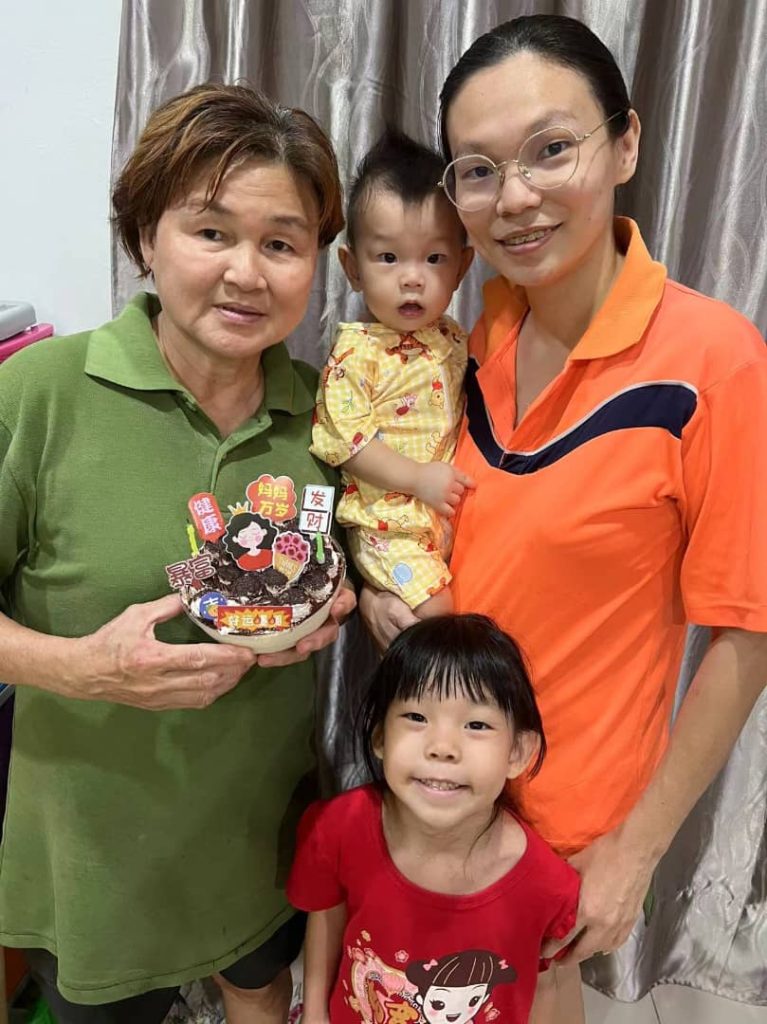
The quiet confines of Beh Su Lee’s house in Sabak Bernam used to be filled with the chatter of her six-year-old granddaughter, Wong Hao Yee, who always had a hundred thousand “whys.” The kitchen at the back of Beh’s house is steeped in emotion because it was not just a place where she prepared food for the family; it was a workplace where Beh and her daughter, Gain Choo Yin, toiled for hours, cooking for other families who loved delectable homemade meals.
On the side table beside her bed, Beh has a tube of unopened mosquito cream that has been there for a year. “Whenever Hao Yee gets a mosquito bite, she would shout and run to my room. She loves to bother me to apply Mopiko for her even when her parents were free. I don’t use it (the cream), but this reminds me of her,” said Beh.
The living room in her house used to be littered with toys Hao Yee played with, along with her one-year-old brother, Wong Zi Hang, who is Beh’s third grandchild after her second grandchild died at four months old due to a congenital heart condition.

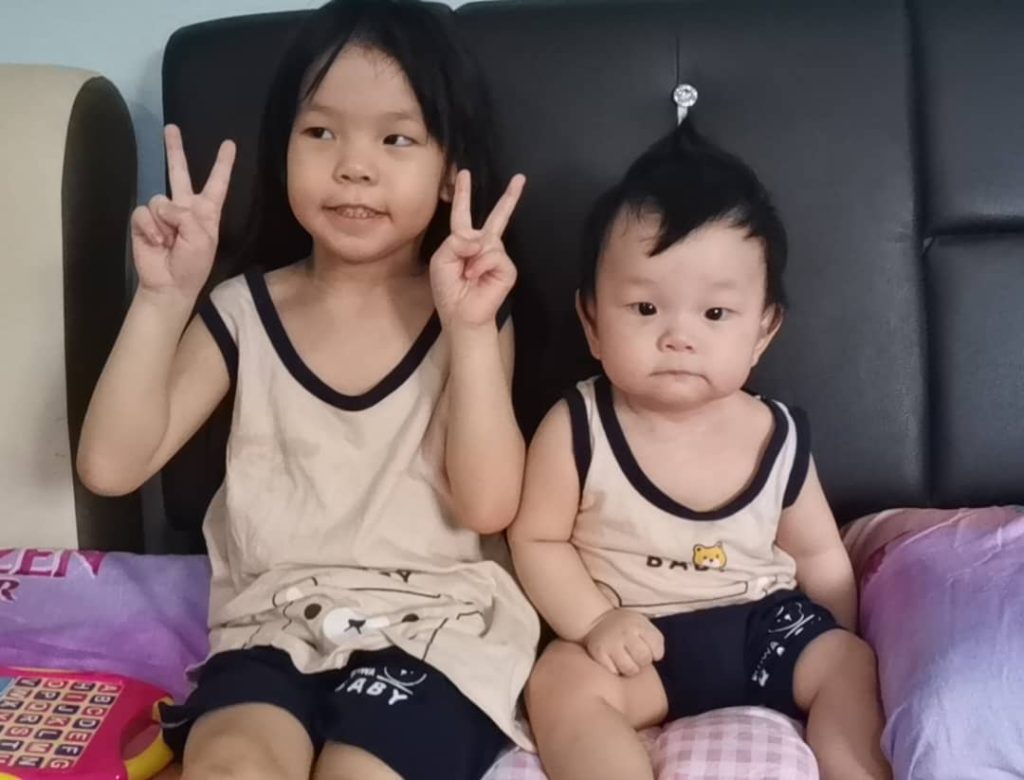
After more than one year of losing her daughter, two grandchildren, and a son-in-law, Beh said she has given away some of the toys but kept some to remind herself of the exciting and unsullied love she once felt. Her husband, Gain, who was a man of few words, said: “Now our home is empty.”

Before December 16, 2022, Beh used to run a home-based catering business with her daughter, whom she fondly called Yin. The mother-daughter duo started the business during the pandemic when her son-in-law lost his job and they had to feed a family of seven.
“After my daughter died (in the Batang Kali landslide, it was hard to cook. I just can’t do it.
“Everywhere in the house, I see images of my daughter. She’d be chopping the vegetables, and I’d be cooking. Everything in our house is still in its place; it’s just that they (family) are no longer around,” said Beh.
For Beh, the pain of loss is not a stranger. Four years after she had Yin, Beh was blessed with a boy whom she brought with her to Singapore where her husband was working at that time. Unfortunately, the boy had a liver disease and succumbed to the illness at 1.5 years old.
“My baby was so small and he had a big scar after the operation to his liver. Three days after my son died, the hospital called to say they had a liver for him,” said Beh.
Later in life, as Yin lost her second child to congenital heart disease, Beh said she fully understood how her daughter felt. “I told her that all of these are written in our fate, and I could feel her sadness.”
Beh copes with grief by keeping the memories of her loved ones alive. “I like it when people tell me what they did with my daughter or ask me about my son or grandchildren; that’s how I remember them. When my son died, my mother asked me to throw away or burn his photos, and I said no. These are the only objects I have left of him; why should I destroy them?”
While Beh had two more daughters after her son, Yin remained particularly close. “After she had her first child, she came back to live with me while my other daughters were away, and I accompanied my daughter to every doctor’s appointment she had.”
When Yin found out that her second pregnancy was destined to end tragically, hospitals were her second home, and her mother was with her throughout the journey, up till the death of her baby. The doctors told her to conceive again as she was still young, and then came Zi Hang, who was the spitting image of Hao Yee.
“My grandson is like her sister, making a lot of noise. The two of them used to play with their bicycles in the garden, and when I sit there today, I always think of them,” said Beh with a smile.
Yin was found together with her son on the third day after the incident happened. Yin’s husband Wong’s body was recovered a day before, and Hao Yee a day later. As Beh walked into the room to identify the pictures of the bodies on the computer, she burst out wailing as she saw the peaceful images of her daughter and grandson.

“When I went in at around 5 or 6pm that evening and saw the photos of my grandson, I could not stop my tears flowing.
“My husband could not bear to go in to see the bodies. I could only remember myself crying and crying,” Beh said of that fateful day.
On the evening the landslide happened, Beh had a fall in her house and suffered a light fracture in her hips.
“I could not sleep not knowing what happened to my daughter. We didn’t have a car then and could not drive to the scene (of the landslide). People told me that drinking alcohol helps one sleep. I tried and still couldn’t sleep.”
After hours of tossing and turning, feeling thirsty, Beh walked out of the room dizzy and fell down, hitting the laundry basket. Her husband helped her up, the couple rested and were back on their feet the next day racing to Sungai Buloh hospital using a car a friend had lent them.
YINs family funeral and wake services were held in Shah Alam.
“I was in so much pain I could not get up, but I went to my daughter’s wake every day. It is time (to spend) with her,” said Beh.
The days after the funeral, as Beh had described, were the hardest. “When I stepped into the house for the first time (after coming back from the funeral), it was as though the house had no life anymore,” said Beh.
This led to Beh’s youngest daughter Rong quitting her job in Klang and returning to Sabak Bernam to open a coffee shop with her mother. The coffee shop was like a refuge for the family where they leave the house for work during the day and did not have to live with the vivid memories of Yin and her children.
In the past year, Beh has also learned to live and appreciate life by going on a trip to China with her husband. ” I have a tumor in my brain. I do not want to do the operation yet, and in these one to two years, I want to say that at least I have traveled,” Beh said.
Ironically, it was on this trip that she dreamt of Yin. “I first dreamt of my granddaughter at my sister’s place in Sungai Besar, where we all set off in a car. Then in China, I dreamt of my sister-in-law calling me into the house, and as I walked in, I saw my daughter tidying the house. “The two grandchildren were there too. I knew that they had passed away, but I still said to Yin: ‘Come, Yin, let mommy hug you.’ We hugged for a long time; I cried and woke up from the dream,” said Beh.
Gain and Beh believe the tragedy that befell their family was destiny, and while they do not specifically blame any party, they are hoping for an apology. “No one apologized to us. It has passed, and we are letting it go, but we would like someone, the owner of the farm or someone, to apologize in front of them (the family’s columbarium),” said Beh.